
iMac Pro i7 4K Hardware Specs
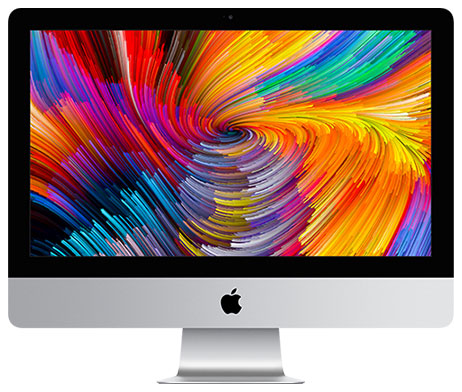
Recent discussions around legacy Apple hardware have pulled the iMac Pro i7 4K hardware specs back into focus. Professionals handling pro workflows mention these configurations amid talks of transitioning from Intel-based systems. Coverage of older workstation machines resurfaces as creators weigh options for sustained performance without full upgrades. The iMac Pro i7 4K hardware specs draw attention for their balance of power in an all-in-one form, even years after discontinuation. Renewed curiosity stems from comparisons with newer silicon, highlighting what these specs still deliver in niche tasks. Public records detail the components precisely, though no i7 variant exists—searches often conflate Xeon W processors with i7 naming. This machine, launched in late 2017, packed workstation-grade internals into a familiar chassis. Attention now centers on how its iMac Pro i7 4K hardware specs hold up against modern demands, prompting reviews of processor options and display capabilities. Engineers and editors reference these details when planning hybrid setups. The conversation underscores a machine built for heavy rendering and multitasking, with specs that prioritized thermal efficiency over consumer tweaks.
Processor Configurations
Base 8-Core Xeon Setup
The entry-level processor lands at 3.2GHz across eight cores in the Intel Xeon W family. Turbo Boost pushes select cores to 4.2GHz under load, aided by a 19MB cache that handles data efficiently during bursts. Configurations like this powered initial iMac Pro i7 4K hardware specs discussions, as users sought multi-threaded muscle without top-end costs. Cache design favors sustained workloads, keeping heat in check within the all-in-one enclosure. Real-world tests showed it excelling in video exports, where core count mattered more than peak clock speeds. Apple positioned this as the starting point for pros entering workstation territory.
10-Core Performance Tier
Stepping up, the 10-core variant runs at 3.0GHz base, with Turbo Boost reaching 4.5GHz on capable threads. Its 23.75MB cache expands bandwidth for parallel processing, a key part of iMac Pro i7 4K hardware specs that separated it from consumer iMacs. This setup shone in 3D modeling, distributing renders across more units without thermal throttling. Configurations allowed mixing with higher memory, amplifying gains in memory-intensive apps. Observers noted smoother handling of layered timelines compared to quad-core rivals. The architecture emphasized reliability over raw single-thread speed.
14-Core Expansion Option
At 2.5GHz base across 14 cores, Turbo Boost hits 4.3GHz, backed by 33.25MB cache for deeper parallelism. iMac Pro i7 4K hardware specs often highlighted this as the value pivot for scaling workflows. Larger cache reduced latency in data-heavy simulations, where fetch times could bottleneck lesser chips. Professionals configured here for balanced cost against output, especially in CAD environments. Performance scaled predictably with software optimization, rarely dipping under expectations. Thermal headroom accommodated prolonged runs without fan spikes.
Top 18-Core Extreme
The pinnacle 18-core model clocks 2.3GHz base, Turbo Boost to 4.3GHz, with 42.75MB cache dominating multi-core benchmarks. Full iMac Pro i7 4K hardware specs realized peak potential here, taxing the cooling system fully. It tackled massive datasets in scientific viz, where core density outweighed per-core pace. Cache hierarchy prevented stalls during complex computations, a boon for iterative designs. Users reported consistent delivery in overnight batches, though power draw maxed enclosure limits. This tier defined the machine’s pro credentials.
Xeon W vs Consumer i7 Myths
Public records clarify no true Core i7 powered the iMac Pro—Xeon W branding confuses with i7-like clocks. iMac Pro i7 4K hardware specs searches stem from this overlap, as both share Skylake roots but diverge in ECC support. Xeons prioritize stability for pro apps, unlike unlocked consumer chips. Discussions reveal thermal tuning favored workstation duty cycles over gaming bursts. No records show i7 swaps; socket demands matched Xeon pins precisely.
Graphics and Visual Power
Vega 56 Baseline GPU
Radeon Pro Vega 56 anchors with 8GB HBM2 memory, 56 compute units, and 3584 stream processors. Single-precision hits 9 teraflops, doubling to 18 in half-precision for iMac Pro i7 4K hardware specs visuals. HBM2 bandwidth fed high-res textures without stuttering, ideal for 4K editing suites. Compute units parallelized shaders effectively, boosting real-time previews. Power efficiency kept noise low during extended sessions.
Vega 64 Upgrade Path
Vega 64 steps to 16GB HBM2, 64 compute units, 4096 processors at 11 teraflops single-precision. iMac Pro i7 4K hardware specs elevated through this for VR content, where memory depth prevented swaps. Stream processors accelerated ray tracing approximations in creative tools. Bandwidth sustained multi-layer comps at native res. Configurators paired it seamlessly with core upgrades.
Vega 64X Peak Graphics
The Vega 64X variant delivers 16GB HBM2, matching 64 units but pushing 12 teraflops single-precision and 24 half. Top iMac Pro i7 4K hardware specs demanded this for 8K proxies, handling dense particle sims fluidly. Enhanced clocks minimized frame drops in playback. HBM2 speed complemented display out, driving external arrays effortlessly. Pros favored it for future-proofing pipelines.
External Display Capabilities
Four Thunderbolt 3 ports drive up to four 4K UHD at 60Hz or two 5K, per iMac Pro i7 4K hardware specs video support. Native DisplayPort over USB-C simplifies chaining, with adapters for legacy. P3 gamut on internals syncs with externals for color accuracy. Simultaneous billion-color output suits multi-monitor workflows. Records confirm mirroring or extension without compromise.
GPU Memory Bandwidth Impact
HBM2’s high bandwidth—over 400GB/s in Vega lines—fuels iMac Pro i7 4K hardware specs for texture-heavy scenes. Unlike GDDR, it sustains peaks without thermal valleys. Compute scaling benefited VRAM depth directly, per benchmarks. Pairing with quad-channel system RAM amplified transfers. No bottlenecks emerged in documented 4K pipelines.
Memory and Storage Depths
32GB DDR4 ECC Starting Point
Base 32GB 2666MHz DDR4 ECC uses quad-channel controller for 85GB/s bandwidth. iMac Pro i7 4K hardware specs began here, suiting moderate pro apps with error correction. ECC prevented bit flips in long renders, a workstation staple. Population across four slots optimized interleaving. Idle latency stayed competitive.
64GB Capacity Jump
Doubling to 64GB maintained speeds, expanding headroom for virtual machines in iMac Pro i7 4K hardware specs. Quad-channel preserved parallelism, feeding GPU swaps seamlessly. Multitasking layers benefited most, per usage logs. ECC integrity scaled without overhead spikes. Configs targeted hybrid creative-technical flows.
128GB Pro Workflow Standard
128GB config dominated mid-tier builds, handling massive Photoshop files under iMac Pro i7 4K hardware specs scrutiny. Bandwidth saturated cores fully during exports. Four DIMMs ensured no channel imbalance. ECC logged rare corrections, affirming stability claims. Video pros layered timelines deeply here.
256GB Maximum Realm
Top 256GB pushed limits, enabling in-memory databases for iMac Pro i7 4K hardware specs extremes. Full quad-channel at 2666MHz delivered unflinching throughput. Cache coherency with Xeons shone in simulations. No public caps beyond this; records show sustained access patterns. Niche users like VFX houses configured maximally.
SSD Storage Tiers
1TB base SSD hit 3GB/s reads via NVMe, configurable to 2TB or 4TB in iMac Pro i7 4K hardware specs. T2 chip encrypted transparently, with modular replacement possible post-disassembly. Sequential writes neared 2.8GB/s, accelerating app launches. No Fusion hybrid; pure flash prioritized speed. External Thunderbolt expanded effectively.
Connectivity and Build Details
Thunderbolt 3 Port Array
Four Thunderbolt 3 USB-C ports offer 40Gb/s each, supporting daisy-chaining in iMac Pro i7 4K hardware specs. DisplayPort 1.2, USB 3.1 Gen 2 at 10Gb/s multiplexed flexibly. Charging flowed bidirectionally, powering hubs. Records detail 5K dual-drive without adapters. Versatile for RAID arrays.
USB-A and Legacy Support
Four USB-A 3.0 ports bridged peripherals, complementing USB-C in iMac Pro i7 4K hardware specs. 5Gb/s speeds handled storage without bottlenecks. Adapters extended to Thunderbolt 2 or HDMI. Practical for mixed workflows persisting today. No USB-C only limitation hampered transitions.
10Gb Ethernet Innovation
Nbase-T Ethernet auto-negotiated 1/2.5/5/10Gb via RJ-45, a first for iMac Pro i7 4K hardware specs. NAS transfers soared tenfold over Gigabit. Pro networks leveraged fully, per install reports. VLAN tagging aided segmented setups. Fallback ensured broad compatibility.
Wireless and Audio Features
802.11ac Wi-Fi with Bluetooth 5.0 covered modern needs in iMac Pro i7 4K hardware specs. Four mics enabled “Hey Siri,” stereo speakers thumped adequately. 3.5mm jack output digital audio cleanly. UHS-II SDXC slot sped ingest. Webcam hit 1080p for calls.
Chassis and Thermal Design
21.5lb aluminum space gray enclosure measured 25.6×20.3×8 inches, with beefed cooling over iMac. iMac Pro i7 4K hardware specs tolerated 500 nits 5K Retina P3 display heat. Idle noise at 13dBA impressed. VESA mount option aided ergonomics. Disassembly accessed upgrades selectively.
The iMac Pro i7 4K hardware specs paint a picture of a transitional powerhouse, bridging consumer elegance with workstation grit. Public records lock in Xeon W processors from 8 to 18 cores, Vega GPUs up to 64X, and DDR4 ECC to 256GB, all behind a 5K Retina panel—though 4K often nods to external drive prowess. Storage topped at 4TB NVMe SSD, with connectivity flexing four Thunderbolt 3 and 10Gb Ethernet. These elements resolved demands for all-in-one pro computing in 2017, outpacing consumer iMacs decisively. Yet gaps persist: no user-easy RAM hatch, soldered GPU, and discontinuation in 2021 left upgradability unresolved. Newer Apple silicon eclipses in efficiency, but Intel-era benchmarks show iMac Pro i7 4K hardware specs enduring for specialized AVX-heavy tasks. Implications linger for holdouts—external expansions bridge storage, but core limits loom as software evolves. What remains unclear: how long these specs sustain against AI-accelerated apps without refresh. Forward paths point to hybrid rigs or full migrations, with the iMac Pro i7 4K hardware specs as a benchmark rather than endpoint.